ForgeLogbooks Blog
Strongman Training Log: How to Track Events, Implements, and Carries
The complete system for logging overhead presses, deadlift variations, carries, loading events, and competition prep in one logbook
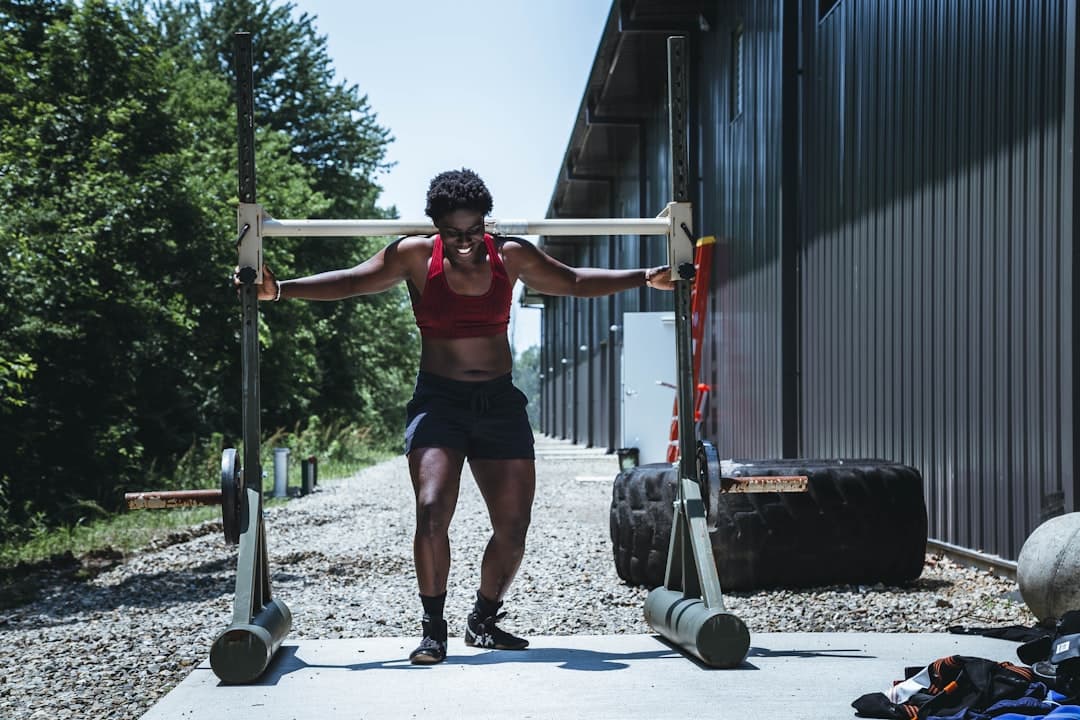
Why this matters
Strongman is the hardest sport to track — every event uses different implements, metrics, and conditions. This guide shows you how to build a strongman training log that captures weight, time, distance, implement type, and reps across every event category so nothing falls through the cracks.
No two strongman sessions look alike. Learn how to log overhead events, deadlift variations, carries, loading races, and moving events with the detail your training actually demands.
Event Categories
5+
Strongman competitions typically test five or more distinct event categories — overhead, deadlift, carry, loading, and moving — each requiring its own tracking format.
Variables Per Event
4–6
A single strongman event can require logging weight, time, distance, implement type, reps, and conditions — far more variables than any standard barbell lift.
Implement Variations
20+
Between log bars, axle bars, circus dumbbells, atlas stones, kegs, sandbags, yokes, and farmer's handles, strongman athletes rotate through over twenty distinct implements in a training cycle.
The Tracking Problem
Why Strongman Is the Hardest Sport to Track
Strongman training resists every tracking system designed for conventional gym work. A powerlifter logs three competition lifts with a barbell. A bodybuilder tracks sets, reps, and weight across machines and dumbbells. A strongman athlete might press a log bar overhead for reps in the first event, carry a yoke for fifty feet in the second, load atlas stones to platforms of varying heights in the third, and drag a sled through mud in the fourth — all in the same competition, all requiring completely different data fields. No single row of sets-and-reps captures the complexity of what actually happened. The variables multiply the moment you step outside the standard barbell paradigm: implement type, implement weight that may differ from what the barbell equivalent would be, distance covered, time elapsed, surface conditions, number of loads completed, platform heights, and whether the implement has handles or requires a bear hug. Most workout apps choke on this kind of data because they were designed around the assumption that every exercise follows the same weight-times-reps structure.
The problem gets worse when you factor in the inconsistency of implements across training locations. The log bar at your gym weighs 80 pounds. The one at the competition weighs 60. The atlas stones in your training set jump from 250 to 300 pounds, but the show uses 230, 260, 290, and 320. Every variable changes from venue to venue and from competition to competition, which means your strongman training log needs to capture not just what you did but what you did it with. A conventional training log treats equipment as a constant. A strongman training log must treat equipment as a variable, and that single shift in perspective changes everything about how you design your tracking system. Understanding why sport-specific logging matters is the foundation of our guide on choosing the right training journal for every athlete type, and strongman is the sport where generic approaches fail fastest.
Paper logbooks solve this problem better than apps because you control the layout. You can dedicate different page sections to different data types, draw columns for fields that no app developer anticipated, and sketch implement diagrams in the margins. The freedom to customize your tracking format event by event is what makes a physical strongman training log more practical than any digital alternative. When your training demands fields that do not exist in a dropdown menu, you need a journal that adapts to you rather than forcing you to adapt to it.
Variable overload
A single strongman event can require logging weight, implement type, distance, time, reps, conditions, and implement-specific notes — six or more variables per entry compared to two or three for a standard barbell lift.
Implement inconsistency
Implements vary across gyms and competitions. Your log must capture what specific implement you used, not just the exercise name, so you can compare performances accurately.
Unique Logging Needs
What Makes Strongman Logging Unique: Fields You Actually Need
A strongman training log needs fields that most lifters have never considered. Beyond the standard weight, sets, and reps columns, you need dedicated space for time — because many strongman events are scored by time to completion or reps within a time limit. You need a distance field because carries, drags, and pulls are measured in feet or meters. You need an implement type column because pressing a log is not the same as pressing an axle even if the weight is identical. And you need a conditions field because performing a yoke walk on rubber mats in a climate-controlled gym is a fundamentally different experience than performing the same yoke walk on wet grass at an outdoor competition. Strip any one of these fields from your tracking and you lose the ability to make meaningful comparisons between sessions.
The implement type field deserves special attention because it is the variable most lifters undertrack. A 200-pound log press is not a 200-pound axle press is not a 200-pound barbell press. Each implement has a different diameter, different balance point, different cleaning mechanic, and different stabilization demand. If your logbook simply says 'overhead press 200 x 3,' you have no idea six weeks later which implement you used and therefore no way to assess whether you have actually gotten stronger on the implement that matters for your next competition. Write the implement name every single time — log, axle, barbell, circus dumbbell, keg — even when it feels redundant. Redundancy in a strongman training log is cheap insurance against useless data.
Time tracking also requires more nuance than most lifters realize. Some events are scored by total time to complete a task — carry this yoke fifty feet as fast as possible. Others give you a fixed time window and score by reps completed — as many log presses as possible in sixty seconds. Your logbook notation system needs to distinguish between these two formats. For timed-completion events, write the total time and the task parameters. For rep-out events, write the time window, the number of reps completed, and whether you had time remaining or got cut off. These are different data types that require different analysis, and lumping them together under a generic time field obscures the information that matters.
- Weight: implement weight in pounds or kilograms, noting whether it includes the implement itself or added plates.
- Time: total completion time for timed events, or time window plus reps achieved for rep-out events.
- Distance: feet or meters covered during carries, drags, and pulls.
- Implement type: specific implement name every session — log bar, axle, circus dumbbell, yoke, farmer's handles.
- Conditions: surface type, weather for outdoor sessions, and any environmental factors that affected performance.
- Reps or loads: number of repetitions for pressing events, number of successful loads for loading events.
Overhead Events
Tracking Overhead Events: Log Press, Axle Press, and Circus Dumbbell
Overhead pressing in strongman is a different animal from strict barbell work. The log bar has a neutral grip and a thick diameter that changes your pressing mechanics. The axle has no spin, which makes the clean brutal and the press a different stabilization challenge. The circus dumbbell is a one-arm press that tests shoulder stability and trunk rotation in ways that no bilateral movement can replicate. Each implement demands its own tracking approach because the carryover between them is limited. A strong log presser is not automatically a strong circus dumbbell presser, and your training log needs to reflect that reality by tracking each implement as a distinct movement with its own progression line.
When logging overhead events, start with the implement name and its empty weight. A standard log bar weighs anywhere from 50 to 110 pounds depending on the manufacturer. An axle bar is typically 25 to 30 pounds but has no revolving sleeves. A circus dumbbell might weigh 60 to 100 pounds empty depending on the handle diameter and globe size. Record the empty implement weight in your logbook's reference section so you can calculate total weight accurately — writing '200 on the log' means different things when the log weighs 70 versus 90 pounds. After the implement weight, log the total weight lifted, the number of reps, and the manner of execution: strict press, push press, or jerk. Strongman overhead events allow leg drive, so tracking whether you push pressed or jerked a weight tells you something different about your overhead strength than if you strict pressed it.
For rep-out overhead events — the format used in most competitions — your log needs to capture the time window, total reps achieved, and pacing notes. Did you hit your first rep at the three-second mark or the ten-second mark? Cleaning the implement to the rack position eats into your pressing time, and how efficiently you clean directly affects your rep total. Note your clean time separately from your pressing cadence. If you spent eight seconds on the clean and had fifty-two seconds to press, that is a different performance profile than spending four seconds on the clean and having fifty-six seconds to press. Tracking this breakdown lets you identify whether your overhead performance is limited by pressing strength or by clean efficiency — two problems that require completely different training interventions. For related guidance on logging accessory movements that support your overhead strength, our guide on tracking accessory work in a logbook covers the principles that apply to strongman pressing accessories.
Implement weight reference
Record the empty weight of every log bar, axle, and circus dumbbell you train with inside your logbook's front cover. Calculate total weight from the implement weight plus added plates.
Clean versus press separation
Track clean time and pressing reps as distinct data points. A slow clean eats into pressing time and masks your actual overhead capacity.
Deadlift Variations
Tracking Deadlift Variations: Car Deadlift, Eighteen-Inch Pull, and Axle Deadlift
Strongman deadlifts share a name with powerlifting deadlifts but the similarities often end there. A car deadlift uses a lever mechanism that changes the resistance curve — the weight feels lighter at the bottom and heavier at the top, which is the opposite of a conventional barbell pull. An eighteen-inch deadlift starts from blocks or a frame that elevates the bar to roughly mid-shin, removing the hardest part of the range of motion and allowing much heavier loads. An axle deadlift uses a thick bar with no knurling and no spin, turning grip into the primary limiting factor. Each variation tests a different physical quality, and your strongman training log needs to treat them as separate movements with distinct tracking requirements rather than lumping them all under the deadlift label.
For car deadlift training, log the frame position, the loaded weight, and the number of reps within the time window. If you train car deadlift on a trap bar or lever machine as a substitute, note the substitute and the setup details so you can estimate how it translates to the competition implement. The mechanical advantage of a car deadlift frame means the numbers are not directly comparable to a barbell pull — a 600-pound car deadlift does not mean you can pull 600 from the floor. Your logbook should keep car deadlift numbers on a separate progression line from your conventional deadlift so you do not confuse yourself when reviewing training history. For eighteen-inch deadlifts, log the exact bar height, the weight, and whether you used a standard barbell or an axle. Height matters because a true eighteen-inch pull is measured from the floor to the center of the bar, and many gym setups are an inch or two off in either direction. Note the measured height so you can replicate the setup consistently.
Axle deadlifts demand special grip notation. Did you use a mixed grip, a double overhand grip, or straps? Competition rules vary — some shows allow straps, others do not. Your training log should differentiate between strapped and strapless pulls because the weights you can handle are dramatically different. A lifter who can axle deadlift 500 with straps and 425 without straps needs both numbers tracked to prepare for competitions with different rulesets. Note the grip type on every set, and consider tracking grip fatigue across your session — if your strapless grip fails on the third rep of your second set, that tells you something important about grip endurance that a single top-set number would miss. When implement failures happen — a grip slip, a lost rep — logging the details helps you diagnose and correct. Our guide on how to log missed lifts and failures covers the notation systems that keep failure data useful rather than discouraging.
- Car deadlift: log frame position, loaded weight, reps, time window, and note any substitute implement used in training.
- Eighteen-inch deadlift: record exact bar height from floor to bar center, weight, barbell or axle, and grip type.
- Axle deadlift: always note grip type — mixed, double overhand, or straps — because competition rules vary.
- Keep each deadlift variation on its own progression line to avoid cross-contaminating your training data.
- Track grip fatigue across sets for strapless axle work to identify grip endurance as a potential limiter.
Carry Events
Tracking Carries: Farmer's Walk, Yoke, and Sandbag Carries
Carry events are where strongman logging diverges most dramatically from conventional training logs. A farmer's walk is not measured in sets and reps — it is measured in weight per hand, distance covered, and time elapsed. A yoke carry adds the variables of yoke height setting, crossbar pad thickness, and whether you walked in a straight line or had to navigate turns. Sandbag carries introduce an unstable load that shifts with every step, making the carry harder at unpredictable moments. Your strongman training log needs a completely different page layout for carry events than for barbell work, and trying to shoehorn carry data into a sets-and-reps format loses the information that actually matters for improving carry performance.
For farmer's walk, log the weight per hand, the total distance, and the split times if you are training with measured intervals. Many strongman coaches program farmer's walks as distance intervals — carry for fifty feet, set down, rest, carry back. Log each interval separately with the weight and time rather than writing a single entry for the whole session. The first fifty-foot carry at 250 per hand in fourteen seconds is a different data point from the fourth carry at the same weight in nineteen seconds, and the performance degradation across intervals tells you about your conditioning and grip endurance. Note any drops — if you dropped the implements at the thirty-foot mark on the third carry, that is a critical data point that disappears if you only log completed distances.
Yoke carries require logging the implement weight, the yoke height setting, the distance, and the time. Yoke height affects performance significantly — a yoke set at your sternum handles differently than one set at your collarbone. Record the height setting in your logbook so you can replicate it and so your performance comparisons are valid. Surface matters enormously for yoke work: rubber gym flooring, concrete, grass, and packed dirt all change the difficulty. Note the surface on every yoke session because a 700-pound yoke carry on rubber mats in twelve seconds is not the same achievement as a 700-pound yoke carry on wet grass in twelve seconds. Sandbag carries add one more variable — the bag size relative to your body. A 200-pound bag that fits between your arms and your chin is manageable. A 200-pound bag that extends above your line of sight changes your balance and breathing mechanics entirely.
Interval logging
Log each carry interval separately with weight, distance, and time. Performance degradation across intervals reveals conditioning and grip endurance limits.
Surface and conditions
Always note the carrying surface — rubber, concrete, grass, dirt — and weather conditions for outdoor work. These variables make identical weights feel completely different.
Loading Events
Tracking Loading Events: Atlas Stones, Sandbag Over Bar, and Keg Loading
Loading events are scored by how many objects you load to a platform or over a bar within a time limit, which makes your logbook entry fundamentally different from any pressing or pulling movement. The primary data points are the number of objects loaded, the weight of each object, the platform or bar height, and the total time elapsed. For an atlas stone series — the classic strongman loading event — you might load five stones of increasing weight to a platform, and your logbook needs to capture the weight of each stone, the platform height, the time for each individual load, and the total run time. Writing 'stones — 5 loads in 42 seconds' tells you almost nothing compared to writing 'stone 1 at 230 loaded in 6 seconds, stone 2 at 260 loaded in 8 seconds, stone 3 at 290 loaded in 9 seconds, stone 4 at 320 loaded in 11 seconds, stone 5 at 350 missed at 8 seconds.'
Atlas stone technique notes are especially valuable in your training log because stone work is highly tactile and hard to replicate with other implements. Log the stone surface condition — is it a natural stone, a concrete replica, or a rubber-coated training stone? Did you use tacky, and if so, which brand and how much? Stone grip changes everything about your loading speed, and what works on a dry rubber training stone in your gym may fail on a wet natural stone at an outdoor competition. Note your lapping position — where on your thighs you sit the stone before the extension to the platform — because small changes in lap position dramatically affect the transition speed. These qualitative notes, combined with your quantitative time splits, build a complete picture of your stone loading that pure numbers cannot capture.
Sandbag over bar and keg loading follow similar principles but add the variable of bar height. Competition bar heights range from 48 to 60 inches, and the technique for loading a sandbag over a 48-inch bar is completely different from the technique for a 60-inch bar. Log the bar height on every training session so you can track performance at the specific height you will face in competition. Kegs add a rotational element — you typically need to grip the lip and rotate the keg to clear the bar, and your technique notes should capture grip position, rotation timing, and whether you loaded the keg cleanly or had to fight for it at the top. Loading events reward athletes who train the specific implements and heights they will face, and a detailed strongman training log is how you ensure your practice sessions actually simulate competition conditions.
- Log each individual load with its weight and the time taken, not just the total number of loads and total time.
- Record stone surface type, tacky usage, and lapping position for atlas stone work.
- Note the bar height for every sandbag-over-bar and keg loading session.
- Track transition times between objects — the walk back and pickup of the next implement is where time leaks happen.
- Compare training stone weights to competition stone weights and log the differences for preparation adjustments.
Moving Events
Tracking Moving Events: Truck Pull, Sled Drag, and Chain Drag
Moving events — truck pulls, sled drags, and chain drags — are the most condition-dependent events in strongman, and your logbook needs to account for variables that have nothing to do with your strength or technique. A truck pull on flat asphalt in dry weather is a completely different challenge than the same truck pull on a slight uphill grade after rain. A sled drag on a smooth gym floor bears almost no resemblance to a sled drag on a gravel parking lot. If your training log does not capture the conditions alongside the performance data, you will draw incorrect conclusions about your progress. You might think you got weaker because your sled drag time increased by four seconds, when in reality you moved to a higher-friction surface that added resistance your numbers do not reflect.
For truck pulls, log the vehicle type or sled weight, the rope length, the pulling distance, the surface type, the grade (flat, uphill, downhill), and the weather conditions. Note your harness setup — chest harness versus arm-over-arm rope, body angle at the start, and whether you used a hand-over-hand technique or a marching technique. Truck pulls are won or lost in the first five seconds when you overcome static friction and get the vehicle rolling, so note your start time separately from your total time if possible. A lifter who gets the truck moving in three seconds and finishes in twenty-two seconds has a different performance profile than one who takes seven seconds to break the truck loose and finishes in twenty-four. The first lifter has better acceleration but slower sustained pulling. The second has a weaker start but better endurance. Your training interventions for each are different, and your log data should be detailed enough to tell you which profile fits you.
Sled drags and chain drags are simpler to track but still require attention to conditions. Log the sled weight, the chain weight if applicable, the distance, the time, and the surface. Some strongman gyms have dedicated pulling lanes with consistent surfaces, which makes session-to-session comparisons reliable. If you train on inconsistent surfaces, note this explicitly so you do not misinterpret performance fluctuations as strength changes. For programming purposes, many coaches prescribe sled work by time rather than distance — drag for thirty seconds, rest for sixty, repeat — and your log should match the prescribed format. If the workout calls for time intervals, log time intervals. If it calls for distance, log distance. Matching your log format to your programming format makes weekly reviews faster because you can compare directly without converting between metrics.
Logbook Organization
How to Organize a Strongman Logbook: Gym Days vs. Event Days vs. Competition
The biggest organizational challenge in a strongman training log is that your gym days and event days require fundamentally different page layouts. A gym day — where you squat, bench, deadlift, and do accessory work — follows a conventional sets-and-reps format that any training journal can handle. An event day — where you train atlas stones, yoke carries, farmer's walks, and log presses — needs the multi-variable format we have been discussing throughout this article. Trying to use the same page layout for both types of sessions either wastes space on gym days or cramps your event day entries into inadequate fields. The solution is to design two distinct page templates: a strength day template and an event day template.
Your strength day template should look similar to what a powerlifting logbook uses — exercise name, weight, sets, reps, RPE or effort rating, and a notes column. The exercises on strength days typically include squat variations, pressing variations, rowing and pulling movements, and targeted accessories for weak points. This is the work that builds the general strength foundation that your event performance sits on top of. For detailed guidance on structuring accessory tracking, our guide on the best workout logbook for powerlifting covers page layout principles that transfer directly to strongman gym days because the barbell work is structurally identical.
Your event day template needs more horizontal space per entry. Instead of a simple exercise-weight-sets-reps row, each event entry should have fields for implement type, implement weight, distance or reps, time, surface or conditions, and technique notes. Group events by category on the page — all overhead work together, all carries together, all loading work together — even if you trained them in a different order during the session. Grouping by category makes review faster because you can scan all your carry performances in one place rather than hunting through chronological entries. Competition days get their own template entirely: a pre-competition checklist, a warm-up timing plan, an event-by-event results section, and a post-competition review page. Design your logbook at forgelogbooks.com/forge with separate templates for each session type so every page matches the work it records.
- Use two page templates: a strength day layout for gym sessions and an event day layout for implement work.
- Strength days follow a standard exercise-weight-sets-reps-RPE format.
- Event days use a wider format with fields for implement, weight, distance, time, conditions, and notes.
- Group event day entries by category rather than chronological order to speed up weekly reviews.
- Competition days get a dedicated template: warm-up plan, event results, and post-competition review.
Implement Substitutions
Tracking Implement Availability and Substitutions
Not every gym has atlas stones. Not every gym has a log bar. Not every gym has a yoke. This is the reality of strongman training, and your logbook needs a system for tracking what you actually used when the ideal implement was not available. If your next competition includes a 300-pound atlas stone to a 52-inch platform and your gym does not have atlas stones, you might train the loading pattern with a heavy sandbag to a similar height. Your logbook entry should note the substitute implement, the weight, the target height, and how you believe the substitute compares to the competition implement. This is not guesswork — it is an informed estimate based on your experience with both implements that you refine over time as you get access to the real equipment during competition prep or travel to a better-equipped gym.
Create a substitution reference section inside your logbook's front or back cover. List each competition event you are preparing for, the specific implement and weight used in competition, and your current training substitute. Update this reference as your access to implements changes — maybe you found a gym with stones that you can visit once a month, or a training partner bought a log bar that you can use on weekends. The substitution reference becomes a planning tool that shows you exactly which implements you still need to practice before competition day. Many first-time competitors show up having never touched the actual competition implements, and their event performance suffers because the implement feels nothing like the substitute they trained with. Your logbook should make this gap visible weeks before the competition so you have time to close it.
When you do get access to the real implement after training with substitutes, log the comparison data explicitly. How did the 300-pound atlas stone feel compared to the 300-pound sandbag you have been using? Was the lapping position different? Did the platform loading technique change? Write these comparison notes immediately after your first session with the real implement because the contrast is sharpest when the substitute training is still fresh in your body. Over time, you build a personal database of substitution equivalencies — you know that your sandbag clean translates to about 85% of your stone clean, or that your Swiss bar press runs about 10% ahead of your log press. These ratios, documented in your logbook, let you project competition performance from substitute training numbers with reasonable accuracy.
Competition Prep
Competition Prep Tracking: Attempt Cards, Warm-Up Timing, and Event Order
Competition preparation in strongman involves more logistical variables than almost any other strength sport. You are not just preparing for one or two lifts — you might face five to seven events over one or two days, each requiring different implements, different energy system demands, and different warm-up protocols. Your strongman training log during the final four to six weeks of competition prep should include a dedicated section for competition planning that maps out each event in order, your target performance, your warm-up sequence, and your contingency plan if something goes wrong. This planning section is separate from your daily training entries and serves as the master document you bring to the competition venue.
Warm-up timing is critical and underestimated. Unlike a powerlifting meet where you warm up for one lift at a time with predictable timing, strongman competitions often have tight transitions between events. You might finish a max deadlift and have fifteen minutes before you need to be warm and ready for a farmer's walk. Your training log should document the minimum warm-up you need for each event type based on your experience during training. For overhead events, how many progressive sets do you need to reach your working weight? For carries, do you need a light practice run or can you go straight to competition weight? For atlas stones, do you need tacky application time factored in? Write these warm-up protocols into your competition plan and test them during the final training weeks. Our guide on using your logbook during a strength peaking block covers the broader principles of narrowing your training focus as competition approaches, and those principles apply directly to strongman competition prep.
Attempt cards and declared weights work differently in strongman than in powerlifting. Some events have fixed weights that every competitor uses. Others allow you to choose your starting weight. For events with weight selection, your logbook should contain a decision tree: if you are feeling strong and the warm-up went well, you start at weight X. If you are feeling flat or fatigued from the previous event, you start at weight Y. Having these decisions pre-made and written in your logbook prevents the emotional decision-making that costs many competitors points. You do not want to be standing behind the stage deciding your opener based on how you feel in the moment — you want to consult the plan you built during six weeks of systematic preparation.
Event-by-event warm-up protocols
Document the minimum warm-up sequence for each event type. Test these protocols during the final training weeks and refine them based on how you performed after each warm-up.
Pre-made decision trees
For events with weight selection, write your starting weight options into your logbook before competition day. Decide in advance based on training evidence, not in-the-moment feelings.
Recovery Logging
Recovery Logging for Strongman: Why It Matters More Than in Any Other Strength Sport
Strongman training imposes recovery demands that dwarf conventional strength training. A heavy yoke session loads the spine with supramaximal weight. Atlas stone training beats up the forearms, biceps, and skin. Farmer's walks destroy grip endurance for days. Log presses compress the wrists and elbows in ways that barbell pressing does not. The cumulative fatigue from training multiple event categories in a single week can overwhelm recovery capacity faster than any periodized barbell program, and your logbook is the early warning system that catches overreaching before it becomes a full-blown problem. Track recovery markers on every training page — sleep quality on a simple 1-to-5 scale, overall readiness rating, grip soreness, joint status for elbows and shoulders, and skin condition on forearms and biceps if you are doing regular stone work.
Grip recovery deserves its own tracking line in a strongman logbook because grip fatigue accumulates across event categories in ways that are not immediately obvious. A heavy axle deadlift session on Monday fatigues your grip. A farmer's walk session on Wednesday fatigues your grip further. An atlas stone session on Friday demands grip on a completely different implement but from forearms that have not recovered from the week's earlier work. If you do not track grip status across the week, you will misattribute poor stone loading performance to weak stone technique when the real problem is accumulated grip fatigue from two earlier sessions. A simple daily grip rating — fresh, slightly fatigued, moderately fatigued, significantly fatigued — written at the top of each training page makes this pattern visible within two to three weeks of consistent tracking.
Skin damage tracking sounds unusual but is genuinely important for strongman athletes who train atlas stones regularly. Stone work abrades the forearms and biceps, and training on torn skin increases infection risk and reduces your ability to grip the stone effectively. Note skin condition before each stone session — intact, scraped, scabbed, healing — and adjust your training volume accordingly. Many experienced strongman competitors plan their stone sessions around skin recovery, spacing them far enough apart that the skin heals between sessions. Your logbook makes this planning possible by giving you a record of how long your skin takes to recover from various stone training volumes. Pair your recovery logging with smart programming and you avoid the common strongman trap of training through accumulated damage until something breaks.
- Rate sleep quality and overall readiness on a 1-to-5 scale at the top of every training page.
- Track grip status daily: fresh, slightly fatigued, moderately fatigued, or significantly fatigued.
- Note joint status for elbows, shoulders, and wrists — the joints most stressed by implement work.
- Log skin condition on forearms and biceps before every atlas stone session.
- Review recovery trends weekly to catch accumulated fatigue before it forces missed training.
Contest Day Template
Contest Day Log Template: What to Record During Competition
Competition day is where your strongman training log earns its keep. The chaos of a strongman competition — multiple events, unfamiliar implements, changing schedules, weather conditions, and adrenaline — makes real-time documentation essential. Without a structured contest day template, you will forget critical details by the time you sit down to review. Build a contest day spread in your logbook before competition day with the following sections: pre-competition status, event-by-event results, and post-competition review. The pre-competition section captures your body weight, sleep the night before, meal timing, arrival time, and overall readiness rating. These baseline data points contextualize everything that follows.
The event-by-event results section is the core of your contest day log. For each event, record the event name, the implement specifications (weight, type, height), your result (reps, time, distance, or placement), and immediate post-event notes about how it felt. Write these notes between events while the experience is fresh — do not wait until the competition is over because the details blur together after five or six events. If an event went poorly, note why: was it a strength limitation, a technique breakdown, a conditioning failure, or an implement familiarity issue? Each of these root causes leads to a different training adjustment, and identifying the cause at the point of failure is far more accurate than reconstructing it from memory days later.
The post-competition review section is where you synthesize the day's data into actionable training priorities for the next cycle. Which events were your strongest relative to the field? Which were your weakest? Were there events where better implement familiarity would have made a significant difference? Did your warm-up timing plan work or did you feel rushed between events? Write your top three training priorities for the next competition prep cycle based on the evidence from this competition. This review closes the loop between competition performance and training programming — your logbook becomes the bridge that connects what happened on the platform to what happens in the gym over the next twelve to sixteen weeks.
Between-event notes
Write your event result and performance notes between events, not after the competition ends. Details blur together after multiple events, and real-time notes are dramatically more accurate.
Post-competition priorities
End your contest day log with three specific training priorities derived from competition results. These priorities become the foundation of your next training cycle.
Medleys and Circuits
How to Log Medley Events and Timed Circuits
Medley events and timed circuits are the most complex entries in any strongman training log because they combine multiple implements, movement patterns, and scoring criteria into a single event. A typical medley might include a farmer's walk for fifty feet, a log press for three reps, and a sled drag for fifty feet — all performed sequentially under a single running clock. Your logbook entry for a medley needs to capture each component separately while also recording the total time. This means logging the farmer's walk weight, distance, and split time, then the log press weight and rep time, then the sled drag weight, distance, and split time, and finally the total elapsed time for the entire medley.
The split time for each component is the data point that most lifters skip but that matters most for improving medley performance. If your total medley time is sixty-five seconds, you need to know how that time breaks down across the three components to identify which one is dragging your total down. Maybe your farmer's walk took fifteen seconds, your log press took thirty seconds, and your sled drag took twenty seconds. The log press is clearly the bottleneck, and drilling faster clean-to-press transitions or building pressing endurance will improve your medley time more than getting faster at the farmer's walk. Without component splits, you would train all three movements equally and miss the opportunity to target the weakest link.
For timed circuits where you cycle through stations with fixed rest intervals, log each station as a separate entry within a single circuit block. Note the station order because fatigue accumulates differently depending on which movement comes first. A circuit that starts with atlas stones and ends with overhead pressing produces different results than the same circuit in reverse order because stone work fatigues the biceps and forearms, which affects your pressing clean. If your coach rotates the station order across training weeks, your logbook captures the effect of that rotation on your performance at each station. Over several weeks, you can identify which event orders favor your strengths and which expose your weaknesses — information that is directly relevant to competition strategy when event order is announced.
Sample Page Layouts
Sample Page Layouts: Event Days vs. Strength Days
Your strength day page layout should follow a vertical structure with rows dedicated to each exercise. At the top of the page, write the date, session type (upper body, lower body, or full body), body weight, and readiness rating. Below that header, each exercise gets a row with columns for exercise name, working weight, sets, reps, RPE, and a narrow notes column. A typical strength day page holds six to eight exercises with three to five working sets each. Leave a small section at the bottom for session summary notes — total training time, overall effort rating, and any pain or discomfort that appeared during the session. This layout is intentionally simple because strength day tracking should not require extra cognitive effort. You want to spend your mental energy on the lifts, not on figuring out how to log them.
Your event day page layout needs a wider format with more horizontal space per entry. Instead of tight rows, use blocks — one block per event trained. Each block starts with the event name and implement specifications on the first line. Below that, list each set or attempt with its own sub-row containing the weight, distance or reps, time, and a notes field wide enough for technique observations. A typical event day page holds three to four event blocks, which is realistic for most event training sessions. Between event blocks, leave a transition line where you note the rest period and any equipment changes. At the bottom of the event day page, include a session summary with total training time, overall fatigue rating, and grip status assessment. This block format gives each event the space it needs without wasting page real estate on empty fields that only apply to other event types.
A competition day page layout combines elements from both templates but adds logistics. The top section is a pre-competition checklist: body weight, weigh-in time, first event start time, equipment check (belt, sleeves, tacky, chalk, straps), and nutrition plan. The middle section has one block per competition event, structured like the event day template but with an additional field for placement or score. The bottom section is a post-competition review with fields for strongest event, weakest event, implement familiarity gaps, warm-up timing assessment, and top three priorities for the next training cycle. Design all three templates as separate page layouts in your custom logbook at forgelogbooks.com/forge and assign the right template to the right training day so every session starts on a page that is already structured for the work ahead.
- Strength day layout: vertical rows with columns for exercise, weight, sets, reps, RPE, and notes.
- Event day layout: horizontal blocks per event with fields for implement, weight, distance, time, and technique notes.
- Competition day layout: pre-competition checklist, event-by-event results blocks, and post-competition review section.
- Assign each template to the correct session type in your custom logbook so the right format appears on the right day.
- Leave transition lines between event blocks to note rest periods and equipment changes.
Action checklist
Deploy it this week
Record the implement name on every entry
Never write just the exercise name. Specify the exact implement — log bar, axle, circus dumbbell, atlas stone, farmer's handles — because the same movement on different implements produces non-comparable data.
Log time, distance, and conditions for every carry and moving event
Carries and moving events are defined by time and distance, not sets and reps. Include the surface type and weather conditions so your comparisons between sessions account for environmental variables.
Track individual load times for loading events
Do not just record total time and total loads. Write the time for each individual load so you can identify which object or transition is your bottleneck and train accordingly.
Rate grip status and overall recovery at the top of every training page
Grip fatigue accumulates across event categories and limits performance on implements you might not associate with grip work. A daily grip status rating makes hidden fatigue patterns visible within weeks.
Remember
3 takeaways to screenshot
- ⚡Strongman is the hardest sport to track because every event uses different implements, metrics, and conditions — a training log built for barbell work will miss the data that actually drives event performance, and a custom logbook with separate templates for strength days, event days, and competition days solves this problem at the page level.
- ⚡The implement name, not just the exercise name, is the most important field in a strongman training log because a 200-pound log press, a 200-pound axle press, and a 200-pound barbell press are three different lifts that produce three different training effects and must be tracked on separate progression lines.
- ⚡Recovery logging matters more in strongman than in any other strength sport because the cumulative fatigue from training multiple event categories — overhead pressing, heavy carries, stone loading, and sled work in a single week — overwhelms recovery capacity in ways that only become visible through consistent daily tracking of grip status, joint health, skin condition, and overall readiness.
FAQs
Readers keep asking…
Can I use a generic workout logbook for strongman training or do I need a sport-specific layout?
A generic logbook works for your gym-based strength days because those sessions follow a standard sets-and-reps format. However, event days require a fundamentally different layout with fields for implement type, distance, time, conditions, and technique notes that generic logbooks do not provide. The most effective approach is a custom logbook with two page templates — one for strength days and one for event days — so you always have the right fields for the work you are doing. You can design both templates at forgelogbooks.com/forge and print them into a single logbook.
How do I track progress when the implements change between my training gym and competition?
Create a substitution reference section in your logbook that lists each competition event, the specific implement used, and your current training substitute. When you get access to the real implement, log comparison data — how did it feel versus the substitute, what technique adjustments were needed, and what is the approximate strength ratio between the two. Over time, you build personal conversion ratios that let you estimate competition performance from training numbers. Update these ratios as you gain more experience with different implements.
Should I log training and competition in the same logbook or use separate books?
Use the same logbook. Your competition results are the validation or correction of your training data, and keeping them in the same book allows you to flip between training entries and competition results without hunting through separate notebooks. Dedicate a specific page template to competition days so the format differs from training pages, but keep everything in chronological order within one book. Post-competition review notes that reference specific training sessions are much easier to write when both the training and competition data are within arm's reach.
How do I log a medley event where I use three different implements in sequence?
Log each component of the medley separately with its own weight, distance or reps, and split time, then record the total elapsed time for the complete medley on a summary line. The split times are the most important data points because they reveal which component is your bottleneck. If your total time is sixty-five seconds and the log press component takes thirty of those seconds, you know that pressing efficiency — not carry speed or drag power — is the highest-leverage improvement target. Treat the medley as three linked entries rather than one combined entry.
What recovery metrics matter most for strongman athletes to track in their logbook?
Grip status is the single most important recovery metric for strongman because grip fatigue accumulates across event categories — axle deadlifts on Monday, farmer's walks on Wednesday, and atlas stones on Friday all tax grip through different mechanisms, and undertrained grip becomes the invisible limiter across unrelated events. Beyond grip, track sleep quality, overall readiness on a one-to-five scale, joint status for elbows and shoulders, and skin condition on forearms if you train atlas stones regularly. Review these markers weekly to catch accumulated fatigue before it forces missed training sessions.
Still with us?
Turn today’s insight into a paper trail of progress.
ForgeLogbooks pairs premium materials with conversion-ready layouts so your training feels pro, on and off the platform.